

Veta Origin launched its large language model across six African countries. Then they rejected a half-million-dollar offer from a U.S. VC. This is the kind of energy we need.
Let’s talk about something that actually matters.
A Nigerian startup just launched an AI model built specifically for African users, not adapted from a Western one, not licensed from OpenAI, not a ChatGPT wrapper with a new name. Built. From scratch. For us.
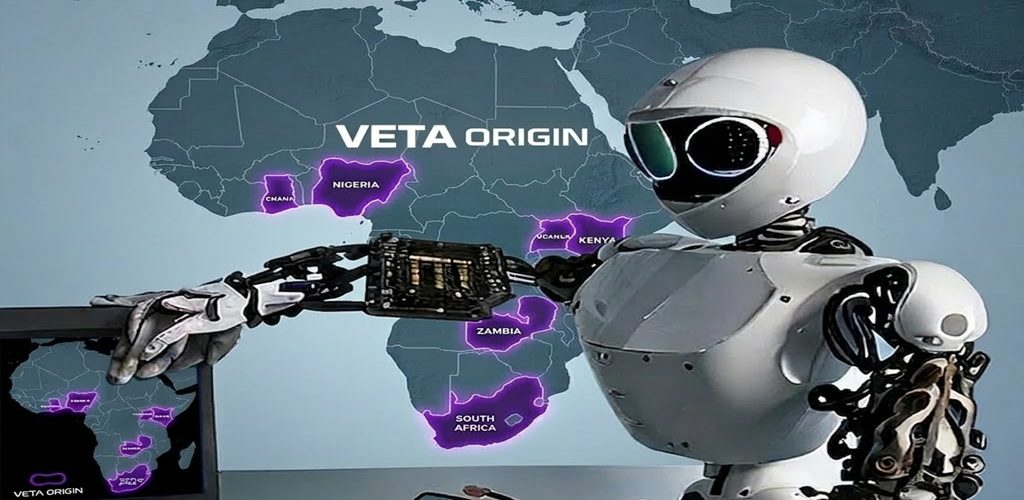
Veta Origin, founded by Ismail Waziri, is now live in Nigeria, Ghana, Kenya, Uganda, South Africa, and Zambia.
And before you scroll past thinking this is just another tech press release, hear the part that made me sit up: they turned down $500,000 from an American venture capital firm because they wanted to serve Africans first before taking foreign money.
In 2026. With all the funding pressure African startups face. They said no.
That’s not a PR stunt. That’s a statement of intent.
Why this is actually a big deal for Africans
Here’s something most people don’t think about when they’re using ChatGPT or Gemini: those models were built on Western data. Primarily. The internet they were trained on skews heavily toward English, American culture, and Western contexts.
When you ask those models about Lagos traffic, jollof rice discourse, or how to navigate NYSC, the answers are often generic at best, wrong at worst.
And African languages? Even worse. Most global AI models either don’t support Hausa, Igbo, Yoruba, or Swahili at all, or support them so poorly that they’re practically useless in practice.
Veta Origin is trying to solve this from the ground up. The platform supports English alongside Hausa, Igbo, Yoruba, and Swahili, not as an afterthought, but as core to what the product is.
Waziri put it plainly: “Africa deserves AI built for Africans, by Africans. Most AI tools don’t reflect local realities, languages, or everyday challenges.”
That’s not a controversial statement. It’s just true.
The bigger context for Nigerians
Veta Origin isn’t the only Nigerian startup working in this space; it’s worth knowing that. Awarri, in partnership with the Nigerian government, has been building N-ATLAS, an open-source multilingual LLM trained on Nigerian languages, including Yoruba, Hausa, Igbo, and Nigerian-accented English.
Lelapa AI in South Africa is building InkubaLM. There’s a genuine movement of African founders deciding that the continent shouldn’t just consume AI, it should build it.
But what makes Veta Origin’s story particularly interesting right now is the combination of the six-country rollout and that funding decision.
Rejecting $500,000 when you’re a brand-new startup is not a small thing. It signals that Waziri is building with a specific vision, not just chasing the fastest path to scale.
Whether that bet pays off is a different question. But it’s the right kind of ambition.
The real challenge ahead
Let’s be honest about what they’re up against.
OpenAI has billions in funding. Google has infrastructure that spans the entire planet. The compute costs alone for training a competitive LLM are staggering. Veta Origin is currently in real-world testing mode, gathering feedback from early users and iterating.
They’re not claiming to have beaten ChatGPT. They’re claiming to have built something more relevant for African users.
That’s a more winnable argument. And it’s the right one to make.

The goal isn’t to out-resource the giants. It’s to out-context them. An AI that understands that “abi” is not a typo, that knows the difference between Eko and Abuja dynamics, that can process a query in Yoruba without fumbling, that AI is more useful to a Nigerian user than the most powerful Western model that barely knows we exist.
Why we should be paying attention
Nigeria has the talent. We’ve always had the talent. What’s changing is the infrastructure, the ambition, and the willingness to build for ourselves rather than waiting for Silicon Valley to remember we exist.
Veta Origin launching across six countries in its earliest days, turning down foreign money, and betting on African languages as a core product feature, that’s the template we want to see more of.
Whether they become Africa’s defining AI company is still to be written. But they’re asking the right questions. And they’re building in the right direction.
Follow what happens next with this one.
The Taxman is coming for Nigerians, and you’ll pay a fine if you default.














Leave a comment