

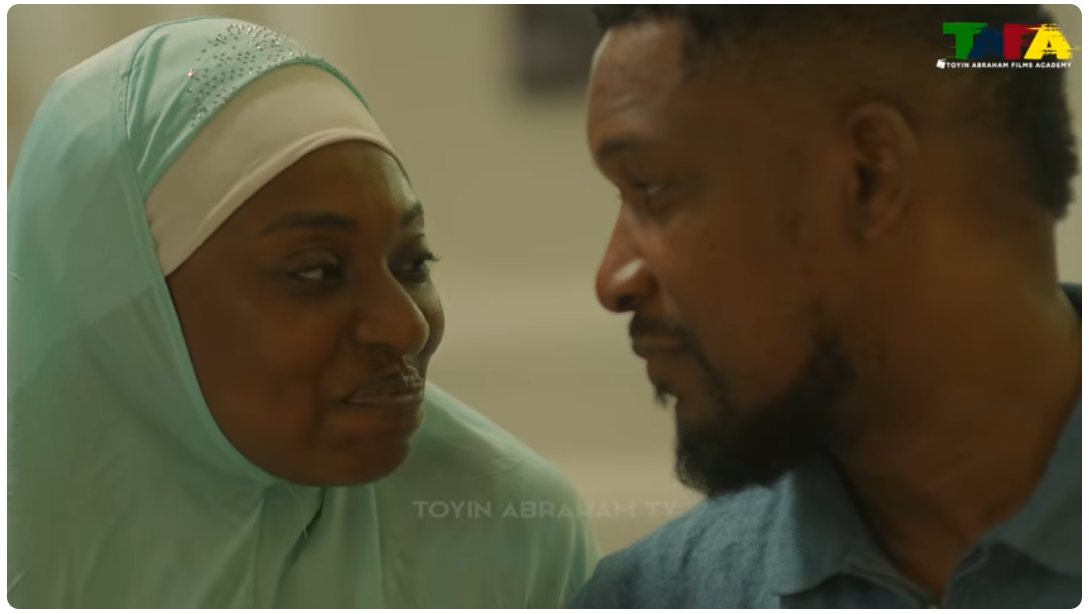
Toyin Abraham put a Muslim woman and a Christian man in love on screen and watched Nigeria lose its mind. The film has problems. But the conversation it started? That one is important.
Let me be upfront about something before we get into this review: I am a Muslim man who believes he can marry a Christian woman without the world ending. So yes, I came into Love Between Two Altars with a bias.
I also came in curious, because Toyin Abraham, whether you love her or not, made a film about the exact thing Nigerians love to argue about and refuse to resolve.
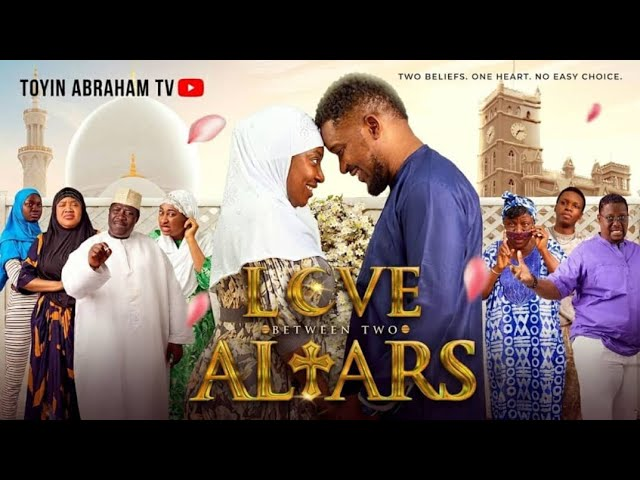
Released on April 6 on Toyin Abraham TV on YouTube, Love Between Two Altars tells the story of Zainab, a Muslim woman, and a Christian man, Samuel, who fell in love, want to build a life together, and then watch their families do everything in their power to stop them.
The tagline is “Two Beliefs. One Heart. No Easy Choice.” Toyin Abraham wrote, produced, and directed it, and she also stars as Zainab. The cast includes Taiwo Hassan (Ogogo), Antar Laniyan, Wole Ojo, and Yvonne Jegede, among others.
The film was already controversial before a single frame aired. Toyin promoted it with the caption “We serve one God,” and Nigeria collectively grabbed its pitchfork. X was on fire. Some people said interfaith marriage is haram.
Some said it’s a sin. Some said the timing was wrong; this dropped just days after the Plateau State attack that killed 27 people, most of them Christians. Whether that was poor timing or brave timing depends on who you ask.
What the film gets right
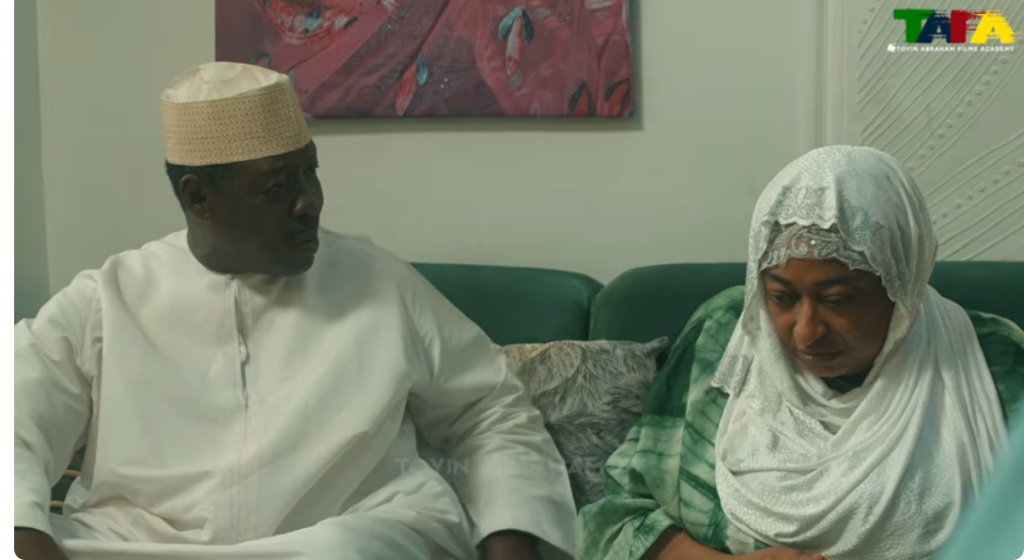
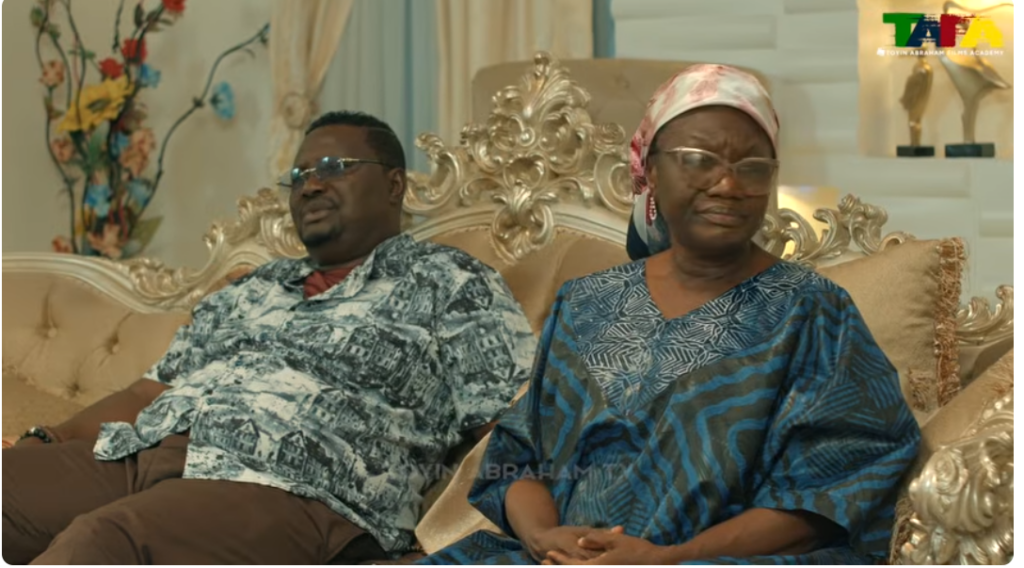
The mothers. That’s where this film earns its grace. While the fathers on both sides are doing the most, rigid, loud, immovable, convinced that religion is the ceiling above which love cannot rise, the mothers are the ones willing to sit with the discomfort and ask a different question. What if love is enough? What if we trust these two people who clearly see each other?
That dynamic is the most honest thing in the film. Because in real life, it often is the mothers. The ones who’ve watched enough life to know that a miserable marriage in the “right” religion is still a miserable marriage. The film deserves credit for that nuance.
The central romance is also handled with warmth. Zainab and her Christian counterpart are written as two people who genuinely see each other, not just two plot devices representing opposing religions. When they are together, the film breathes. You root for them because they feel real, not because the script tells you to.
Where it falls short
Here’s my honest issue: the film is not as brave as its premise. It asks a big question and then gets cautious about the answer. The conflict, while emotionally present, stays at the surface level of family drama without going deep enough into what interfaith marriage actually costs people in this country.
The religious arguments from both sides are painted broadly. The fathers are essentially caricatures of obstruction rather than people whose fears we understand.
And the resolution, I won’t spoil it, feels like Toyin Abraham wanted to start the conversation but wasn’t sure how far to take it. Which, honestly, is fair.
Nigeria is not a safe place to be definitive about this topic. But it does leave the film feeling like it opened a door it wasn’t fully ready to walk through.
The Christian-Muslim conversation is bigger than the film
Here’s the thing, though. Bolu, a friend of mine, put it simply when I asked him: “Love is greater than all things. In heaven or hell, religion doesn’t matter, but what matters is character and how you spend your life on earth.” That line has been sitting with me.
And he’s right. What this film is really about, underneath the family drama and the religion, is alignment. Character. Whether two people are genuinely choosing each other or performing compatibility for the benefit of families who won’t have to live inside that marriage.
I know Muslim friends from my time at Kwasu and Crescent University who made me understand Islam not as a wall but as a way of living, Bolu said. That exposure matters. You can’t fear what you understand. And I think that’s exactly what Love Between Two Altars is trying to say, even if it doesn’t say it as loudly as it should.
The conversation on X after this film dropped was predictable. “Christians shouldn’t marry Muslims.” “It goes against the faith.” All of it coming from people who probably also know a “same religion” couple whose home is a war zone.
Because here’s what nobody wants to say out loud: marrying someone of the same religion does not guarantee peace, love, or longevity. It guarantees a shared label. That’s not the same thing.
A Muslim man can marry a Christian woman; Islamic tradition allows it, though the reverse has more complexity.
But even beyond the rules, the question worth asking is: who are you marrying? What is their character? How do they treat people? Do they see you? Those questions matter more than which altar they pray at.
The verdict
Love Between Two Altars is an imperfect film carrying an important message. It is not Toyin Abraham’s most technically accomplished work; the pacing drags in the middle, the supporting characters are underdeveloped, and the climax is less powerful than the premise deserves.
But it is honest, it is warm, and it is asking a question that Nigerian cinema has largely been too careful to ask directly. Can a Muslim marry a Christian?
Watch it. Then argue about it with someone you respect. That’s probably what Toyin Abraham intended anyway. So, can you marry a Christian/Muslim? You’ll have to answer that yourself.
Two Beliefs. One Heart. No Easy Choice. She wasn’t just describing the film.










Leave a comment