

South Africa’s second-largest mobile operator is going digital-first. And it’s coming for Rain.
MTN South Africa has launched Pi, a standalone digital network that runs on MTN’s infrastructure but operates as its own brand.
No contracts. No credit checks. No call centres. You sign up on an app, manage everything from one account, and change your plan whenever you want.
It went live Monday, and it’s a direct shot at the digital-first operators, particularly Rain, that have been eating into MTN’s younger customer base for a while now.

What Pi actually offers
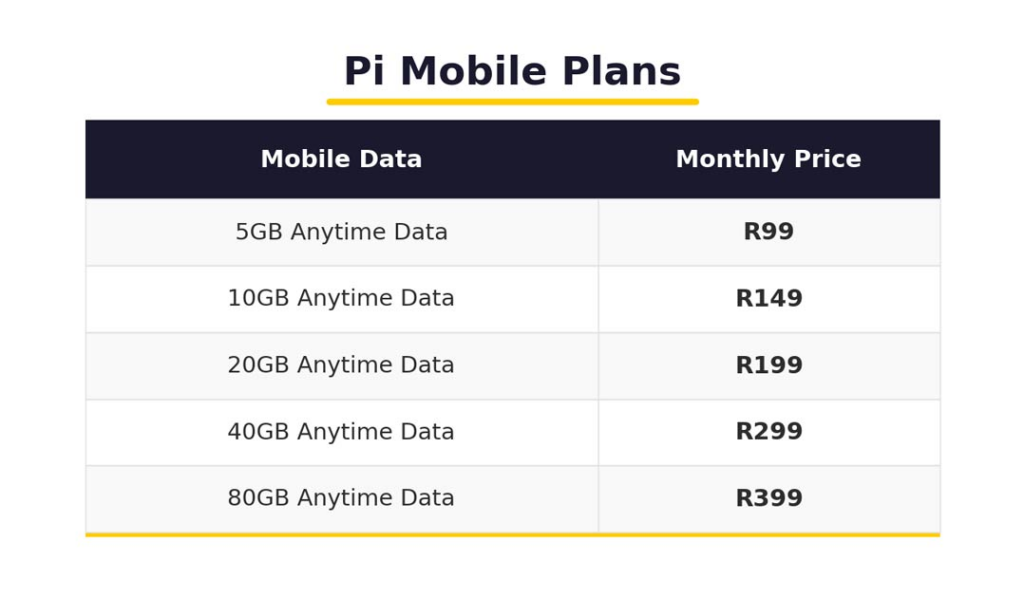
On the mobile side, plans start at R99/month for 5GB and go up to R399/month for 80GB. Minutes and SMS are sold separately, starting at R79/month for 500 of each. As an introductory offer, the 5GB, 10GB, and 20GB plans are available for R1/month for the first three months, which is aggressive.
One feature worth highlighting: unused mobile data rolls over for up to 12 months. That’s one of the biggest frustrations South African mobile users have carried for years, and Pi is addressing it directly.
On the home connectivity side, Pi offers 5G packages ranging from 200GB at R399/month to 1TB at R699/month.
There are also “mobility bundles” from R69 that let you use your home data allocation on the go, which most home internet services don’t offer.
Routers are available as one-off purchases. The ZTE G5TS starts at R499 and the Huawei 5G CPE at R999, keeping with Pi’s no-contract philosophy.
Why MTN launched this as a separate brand
MTN isn’t just adding a digital tier to its existing service. It’s building a whole new brand, complete with its own positioning, app, and pricing architecture. The “endorsed by MTN” framing gives Pi independence while borrowing the trust that comes with the MTN name.
The distinction matters. MTN calls Pi a “digital network operator” rather than an MVNO, because Pi runs on MTN’s own infrastructure rather than buying wholesale capacity from a third party. It’s a subtle difference, but it gives Pi more flexibility and reliability than a traditional MVNO.
By keeping Pi separate, the telecom giant also protects its core brand from a price war while still showing up competitively in the digital-first space where Rain and Melon Mobile have been winning.

South Africa’s mobile market is under real pressure from operators that have stripped out physical retail, call centres, and contract lock-ins. Rain built a significant subscriber base doing exactly that. Pi is MTN’s answer, built to compete on the same terms without dismantling what MTN already is.
Whether Pi can match Rain’s momentum or pull users away from MVNOs like Melon Mobile will depend on execution.
The pricing is competitive but not dramatically cheaper than existing options. MTN is betting that the combination of 5G coverage, bundle flexibility, and the convenience of managing mobile and home connectivity from one account will be enough to win.
It’s a smart move. The question now is whether South Africans will switch.
₦100,000 fine awaits Nigerians who miss the March 31 tax deadline











Leave a comment